Categories
Product Management Sales & Marketing

Deciding the Go-To-Market for your business | Importance of Sales Channels & their different types

In this post, I will talk about the importance of sales channels and their different types. I will share the key factors to decide which sales channel to use and why a particular company chooses one sales channel over another. In the end, I will also help you decide or determine which are the best sales channel for your business.

What is a Sales Channel?

The sales Channel is the medium or route through which a company’s products and services reach its customers, meaning it is the place (physical store or online website or a mobile app) from where the customers buy the products or services. If you have recently bought a product from any E-commerce website, you have used the online sales channel of the company. If you walked into a car showroom or a in a shopping mall to buy clothes, then you have visited the retail store channel of the company. Alternatively, a sales channel can also be considered a source of revenue for a manufacturer through which products or services are sold. For example, farmers who grow fruits, vegetables, and commodities, take their produce to the city markets to sell. For them, the sales channel is the marketplace where they sell their produce.

Now the definition of sales channel is out of the way, let’s understand the Importance of Sales Channels

A sales Channel also called a distribution channel is a very important part of the 4P Strategy. Place in the 4P strategy denotes the Sales Channel. Howsoever, great the product is, unless the product is available at the convenience of customers, sales of the products would be poor. Because of the high importance of this element in the 4P Strategy, companies spend millions of dollars in ramping up their distribution networks so that the product is available even in the farthest and remote places in a vast country like India.

Take FMCG products like soaps, biscuits, and shampoos for example which are available in all the towns and even in villages. Another example is numerous finance companies rolling out gold loans, vehicle & property loans have opened their branches or sales channels in rural areas closer to the customer to ensure higher penetration of financial products in the country.

So, what are these different types of Sales Channels

Sales channels can be divided into two types – Direct and Indirect.

The direct Sales Channel is where the company is interacting with the customer directly through company-owned stores, showrooms or through the official website which is the company’s online brand store. It is also through a dedicated sales team or account team in the case of Business-to-Business sales, that interacts directly with clients or customers. In the case of direct sales channel, whether it is the physical store, online store, or an interaction with a customer through the sales team, the company always has the opportunity to showcase its capabilities & strengths & it also gives a window to give the best experience to the customer.

Moving on to the Indirect Sales Channel which is the Resellers

Resellers are the ones who sell products and services on the company’s behalf by adding value. For example, the distributors, stockiest and the retailers in the case of FMCG products are the resellers. They add value by keeping the inventory and offering different varieties of products which the customer may need. Online Market places like Amazon & Flipkart, and large retail chains like Dmart, Croma etc are also examples of Resellers who offer availability, variety and delivery of products.

Companies use different combinations of these sales channels depending upon the type of product and the type of business it is into.  For example, a computer manufacturing company like Lenovo, HP or Dell will have a deep distributor network & also an online presence on E-commerce websites for its business to consumer products where it caters to home users who need a computer and would require the product to be available easily. At the same time, for its B2B business, it would have a direct relationship with the customers and clients. Hence if it is B2C the strength of the channel matters & in B2B direct connection is important.

This brings us to know How to decide the Go-To-Market for your business

Your Go-To-Market strategy really depends on the customer segment you are targeting. Obviously, this strategy can be different for different markets & companies even for the same product. The bottom line is products or services should be made available conveniently.

Let me give some examples, let’s say an FMCG company like HUL or Britannia wants to launch a new soap or a biscuit and wants to increase its presence. Since these companies already have strong distribution or sales channels, they can simply place that new product at all their retailers and enables customers to have a trial of it. This way companies make products available and create awareness.

On the other hand, there are smartphone companies like SAMSUNG, Motorola, and Xiaomi who may want to launch their new smartphone on an E-commerce website first (like Flipkart or Amazon) because that’s where most of the customers are buying the electronics from.

Few companies are also trying to offer the best of both worlds (traditional and digital) like lens kart, CaratLane, and Tanishq where you can choose online which sunglasses or jewellery you would like to buy, and they can come to your home to offer you trials. This is called Omnichannel where you can select which laptop or smartphone you want to buy and that will get delivered from a nearby brand store to your house. The best part about Omnichannel is, that you can also contact the same store for any software or service-related concerns.

If you are a new-age entrepreneur having your own business – you could also start ‘Direct 2 Consumer’ by offering the product through online channels & once your brand establishes, you could add more traditional channels like retail stores. Take Direct to Consumer FMCG products companies like mama earth, the man company, and WoW Skin Science, who are selling cosmetics through E-commerce platforms like Amazon and Flipkart and have built strong businesses and brands. A similar example from the financial products space is the neo banks, and fintech companies like digit insurance, and ditto insurance who are offering insurance products directly to consumers without the need for traditional agents’ channels.

So, what we learned here your go-to-market really depends on the customer segments you want to target and the selling focus required in selling that product or service. If it is a fast-moving mass-market product B2C routes to market like traditional channels and online channels are used.  However, if it is a solution or a niche product or service it needs a dedicated salesperson’s involvement as it was in the case of a B2B sales.

The important thing to note is, that the higher the focused selling skills or value involved, the higher will the be the cost of the sales channel for the company. The cost of an account sales team would be higher than having a consumer website catering to all customer

Summary

A company can have multiple sales channels to sell the products like resellers, eCommerce, partners, kiosks, and branches. You need to be present where the customer is going to search for products. Not only this is true for traditional businesses but also true for new-age businesses.

Hence choosing the right sales channel needs studying the target customer segment deeply. If you are an established brand, then your wide presence becomes important, which means the brand should be visible everywhere. If you are a new business recently started, selling products to consumers directly online can be beneficial in the beginning then you can expand to traditional channels later.

Categories
Product Management Sales & Marketing

How to find the best pricing strategy for your business?

In this post, I talk about the importance of having a winning pricing strategy & how to do pricing of products effectively when you are planning your business or product category. I will explain this through examples of different pricing strategies and my learning experiences in managing product categories.

Why is a winning pricing strategy important?

A pricing strategy is a way through which one achieves the revenue, margin & market share objectives of the company. The way you price your products or services reflects the business’s identity, how you view and treat your competitors and how you value your customers. That’s why it’s important to have a carefully planned pricing strategy.

How to decide the price?

Here, I will be talking about the first pricing strategy which is the Cost-plus price strategy.

Cost-Plus Pricing is a pricing method in which the selling price is set by evaluating all variable costs a company incurs and adding a markup percentage to establish the price. So, the price will be set as:

Price = Cost + Profit Margin

Cost is something that comes after factoring in the product’s manufacturing cost, freight, customs duty, distribution expenses, marketing expenses & other miscellaneous costs.

How much margin can you keep?

If you’re pricing for a category that is highly competitive with multiple players & no significant differentiation In the products, chances are your margins would be lower. An example is commodity products like groceries, staples, or metals where there is no value addition.

However, if the competition is low and there is considerable value differentiation in your product you can drive higher margins.

Let me take an example from the computer accessories category which I was managing at work. Since the branded organized market has lower competition and because Lenovo’s products were differentiated and of superior quality, we were able to drive a higher margin.

The cost-plus pricing strategy is mostly used for physical products from manufacturing companies where there is a relatively predictable fixed cost (such as raw material, labour, maintenances, shipping etc), it is easy to assign a profit margin percentage using markup pricing on top that sustains the business.

This strategy is fast to implement and easy to calculate, however, it lacks connection with the value your product provides to customers & it also makes it difficult to change prices when necessary.

This brings me to the second pricing strategy:

Competitor Based Pricing Strategy

In this type of pricing strategy, a category or product manager maps the products as per the competitor products’ pricing.

Have you noticed that you pay roughly the same amount for Netflix, Amazon Prime Video, Disney+ and other streaming services? That’s because these companies have adopted competitive pricing.

For a new player who wants to establish a foothold in the market, this type of pricing strategy is ideal. This gives us the current pricing structure running in the market. If the new company also has equivalent features or even superior product features, following this pricing strategy helps get a share of the market early as a similar product already exists in the market. If you’re in a competitive market, pricing for the companies involved should be close to what the market can reasonably sustain.

This is true for already existing/established businesses as well, who are required to offer equivalent prices as per competition for similar features products to maintain their market share. But the biggest downside of competitor-based pricing is that you are not using your pricing strategy but following the competitors’ pricing strategy.

Ways to overcome this challenge:

A company or product the company exists to offer customers something different to what is already on the market. A category or product manager should always strive for: Can they offer more value to customers and get a higher profit on their products?

This is a constant process where you as a product manager need to constantly work on improving and bringing differentiating features from your competitors. If those features are unique it may provide stickiness to your customers – then they will stick with your product as well as will pay you more.

Let me share an example of a product that is called a docking station or a multi-port hub. This product is used to connect multiple accessories to a laptop-like a keyboard, mouse, extra display, printer, charge your laptop and so on. Since it is a Universal product every big OEM like Lenovo, HP, Dell, and Targus would have their own docking station. What Lenovo, where I work, did is – we brought a Universal dock that had the latest ports and had free software bundled in it to allow automatic firmware upgrade whenever Lenovo would launch a new version of the software upgrade. Also, the software helped to manage all the devices connected to docks.

In this way – companies can offer better value for similar product features and can increase their margins. Also always communicate the benefits of the product to the customers and not the product features. The benefits are how your product is going to help the users – like this dock will increase the productivity of users because this dock expands the potential of the user’s laptop device by giving them the option to connect with multiple displays and peripherals.

The second way to overcome this margin challenge is by creating a superior brand value. Let me give an example from Paints Industry where there are multiple players in the Indian market and competition is also quite tough. Amidst all these, a company like Asian Paints has been able to create a superior brand value through its multiple brands, unique marketing, strong distribution network and channel-centric policies. Not only this superior brand value helps retain higher margins but also helps to pass down the prices in case of any input cost increase.

Penetration Pricing / Aggressive Price Strategy

Penetration pricing is an acquisition strategy for companies that are trying to gain a foothold in highly competitive markets. These companies “penetrate” the market by offering a lower price than their competitors—enticing customers away from their current provider to gain market share.

In this type of Price strategy, you take over a market by undercutting your competitors. Once you develop a reliable customer base, then you try to raise prices. Many factors go into deciding on this strategy, like your business’s ability to potentially take losses upfront to establish a strong footing in a market.

Penetration pricing is a popular tactic in the business-to-consumer (B2C) market. The competitive nature of these products and the number of choices most consumers have made it difficult to gain a footing in a new market without a strong acquisition strategy.

For example – Reliance Jio – a telecom service provider launched its telecom services few years ago in India and penetrated the market with an aggressive price strategy. It offered free data and voice connections to users and charged a fixed monthly subscription fee. As all these services were offered at a cheaper price, customers switched to Reliance Jio. If Reliance Jio had priced itself closer to AIRTEL as the biggest service provider at the time of launch, it would not have been able to build its customer base as faster.

When you’re deciding whether to implement a penetration pricing strategy, it’s important to understand when it can help your company and when it can hurt it. Entering markets quickly can be very enticing but will require more work to maintain your place once it’s time to increase the price.

Value-Based Pricing Strategy / Customer-Based Pricing

This brings me to the last pricing strategy which is Value-Based Pricing or customer-based pricing.

It is mostly used for B2B companies where there is a customer-specific product or service is sold. It is used commonly for software products, cloud-based products & services.

What is the value-based pricing strategy?

Value-based pricing is a strategy that defines the price of a product or service based on what the target customer believes it is worth.  It involves offering a unique value to customers, based on what they need and basing your prices on how the customer perceives the value of your product or service. Rather than looking at competitors or the market or the cost of the product, you go directly to the source, the customer, and choose a price based on what they’re willing to pay. 

For example, in IT Services Industry for a software project, pricing is done basis the requirements of the client, the timeline of the project, the level of expertise required to execute the project and the number of resources required. Considering all these factors, the pricing for one client may differ from the other. Hence the pricing is based on the value that the customer is deriving and willing to pay.

Value-based pricing strategy can also be used in a product company that is selling services or software with their products. For example, a computer manufacturing company sells laptops to their B2B clients which further is to be used by their employees, the company can also upsell a lot of services & software like service of managing all the assets, 24*7 support services to reduce downtime of employees’ devices, remote device management software, endpoint security solution software to prevent malware attack on user’s laptop. By offering these value-based products/services which are unique and differentiated, a product company can price these products & services basis the value it gives to customers instead of a fixed price that is not derived from the product’s cost.

How is value-based pricing calculated? 

To calculate prices using the value-based method, one needs to deeply study the customer profiles/segments or existing data on your customer base, as well as talk to customers about how much they value your product. You can use this data to create different price points based on different profiles and customer segments and the variations in what these segments are willing to pay. It also gives you unique flexibility in finding and implementing price points that suit different types of customers.

Why is value-based pricing important?

Value-based pricing is important because it involves looking outside to the customer, rather than basing prices on things like cost or competitors. This ensures you’re not restricted to basing your pricing on existing pricing structures or on achieving minimal profitability, but instead on a customer’s willingness to pay.

Also knowing what your customers value always will make evolving your product and features an absolute must. Finally, since your customers are determining product value, you need to communicate with them quite a bit. This constant communication builds great company & customer rapport. You’re building trust and this trust can lead to good things down the road, like higher retention and less churn.

However, figuring out customer valuations is more difficult than it sounds, which is why so many companies opt for cost-plus and competitor-based pricing.  

Summary

Too many businesses set their pricing without putting much thought into it. On the contrary, getting product pricing right can act as a powerful growth lever. If you optimize your pricing strategy so that more people are paying a higher amount, you’ll end up with significantly more revenue than a business that treats pricing more passively. This sounds obvious, but it’s rare for businesses to put much effort into finding the best pricing strategy.

If you’ve already launched your business, you can experiment with these strategies until you determine what works best for your business. You can also vary strategies between products depending on the market for each good or service. For example, even in the same product category where you have a cost-plus strategy to achieve a certain profit, you can choose to have a few products which are more aggressively priced than the competition to gain a higher share of those products. In this way, you are having a hybrid strategy that is optimizing your profits and at the same time allowing you to gain more market share and thus helping you to increase the revenue.

Categories
Product Management

Why do companies introduce new products? How to plan the launch & manage product lifecycle?

Why do companies introduce new products?

The simple answer is to generate more revenue. But that’s not it. Because if companies won’t introduce new products, someone else, the competitors would do it and would take away the market share and the company would lose revenue. Now Let’s go a bit deeper also into finding more reasons.

So, customers’ needs keep changing, take cars for example – in the last 20 years, customers’ requirements have evolved significantly. Even a basic car today should have an infotainment system, automatic transmission, keyless ignition, and many other features which were once considered to be premium features, today most of those features have become essential, hence companies need to keep introducing new products to stay relevant in the market.

Another important reason is that technology is upgrading today at a much faster pace. Take the memory capacity, storage size or the camera of your smartphone. Due to this frequent & fast upgrade, the product life cycle is becoming shorter.  Hence companies are forced to bring newer products faster. Another reason is those good companies who spend a lot of effort & money in their research & development. Those companies keep bringing newer products into the market to showcase their innovation, and strength & to establish their dominance in the market. An example would be Apple which keeps launching newer products like the apple watch or air pods or Nike would be launching a new shoe every year for runners to showcase their technology and R&D efforts.

Also, big companies that have multiple product lines or business lines – introduce newer products or platforms to diversify their revenue. Think about Alphabet (parent company of Google) as an example. Let’s say magically if Google Search is no more, YouTube still makes a lot of money for the company.

How do companies introduce or add new products?

  1. Product line extension

A product line extension is when a company uses the same product or brand name for a new item in the same product category. For example, when a soft drink company offers a new flavour of the soda. Or when a toothpaste company has a product that focuses on whitening teeth and then provides a toothpaste that reduces tooth sensitivity. Another example could be 3 different sizes of iPad because there is segmented demand for three sizes, so Apple is going to make sure the demand is met. As opposed to, creating just one size, and having a percentage of people not buy it because the size isn’t right for them.

2. Brand extension

Brand extension is when a brand or company known for selling one type of product starts selling a different type of product or a new product from a different category. For example, Saffola is a brand name of edible oil from Marico, under the same brand name, the company had also launched Oats, Protein-Shake, Honey, & multiple Immunity boosting products. Similarly, Dettol which started as an Antiseptic liquid extended the Dettol brand name to many other product categories and launched new products like Dettol Soap, Dettol liquid handwash, Dettol hand sanitiser, and Dettol Laundry Sanitizer.

An important point to note is that companies try to keep the underlying brand messaging uniform while creating brand extensions, like Saffola’s is known as a Healthcare brand bringing related products and services, similar Dettol as a brand is also known for protecting health for over 80 years, hence all their products would try to convey the same message.

Both product line extension and brand extension have their own advantages. Extending a product line is less risky than performing a brand extension because customers are already familiar with the existing products and are more likely to try the new product. The new product can leverage the same retail partners, supply chains, packaging, and other things that it shares with the old products. Less advertising and communication are required because of the similarity to the old and well-known products. However, with this less risk, there is a less potential reward as well. The brand is essentially competing with its old products. There is less opportunity for incremental sales because sales of the new product might come at the expense of the existing products.

The third type of new launch is when a company decides to make the existing product end of life or is planning to launch an enhanced version of the existing product. In that case, the company introduces a rollover product or replacement to address the existing demand.

How to plan the launch?

If the new product being launched is a replacement of an existing product then a product or category manager must ensure with the distributors & channel partners, else chances are customers might not want to buy the old product when the new product hits the market, and the company would need to provide discounts to sell the old one. On the other hand, if the inventory levels are lower, a company need to ensure all the existing orders of customers & partners are fulfilled before launching the new one.

Generally, in the case of B2B products where companies work with clients/customers directly, they need to inform them in advance of the planned phase-in and phase-out of the products.

However, if the launched new product is an extension of the existing product category, it is important to minimize the cannibalization of the existing product, which means that the new products should not hamper the sales of existing products in the category. Let me relate it with an example I gave in my previous video, of the backpack which we launched as a part of my category manager role at Lenovo. 

So, to cater to the specific requirements of an entry-level backpack or bag we had launched a backpack at $7, before this we only had a backpack of $13 in the portfolio. While this new product was to cater to different requirements, we also ensured this product is not being utilized for the current requirement else it would have hampered the sales and might result in cannibalization of the existing product.

Whether the new product is a replacement of an existing one or a new line extension, it is always ensured that all the quality checks on that product are completed before launch. Any testing to be done or the certifications required to market the product is also ready.

Then comes the final step of planning a structured marketing promotion spread over a period, which typically begins from a teaser of the new product also called a soft launch to a planned promotion on different media as per requirement (like blogger reviews, social media, direct marketing, channel events etc.) to the final launch event of the product.

Having discussed the importance of new products in growing the company’s revenue and how to plan the launch, it is also very important to manage the product’s entire lifecycle well from launch till the product gets the end of life.  A product’s life cycle has 4 stages – Introduction, Growth, Maturity and Decline.

Companies that have a good handle on all four stages can increase profitability and maximize their returns. Let’s take the ‘Introduction stage’ for example, this stage requires substantial investment in advertising and marketing, while the company might have developed many products recently but which one or two products to launch out of the many in the pipeline is a decision that is to be taken wisely. Also, if the right product is launched, during the growth stage when the demand grows, it requires less marketing efforts and costs.

Another important factor to focus on is the duration of the product till it will be kept alive. Now different products have different lifecycles.

For example smartphones today typically don’t have more than 6-9 months lifecycle from launch to end of life, likewise, a laptop might have a one-year lifecycle, because as the technology upgrades, the current products become obsolete hence companies need to introduce superior products.

In this case, ensuring the supplies of products till their lifecycle is important and announcing the upcoming products to the customer becomes critical for companies to not lose their spot or market share. Lastly, even while managing the product lifecycle the key element is collecting feedback, which helps to gather insights to improve the product. This gives companies ideas to upgrade the next version of a product.

Categories
Product Management Sales & Marketing

Product Strategy example from two Automakers

In my previous post, I shared how important it is to collect customer feedback to build a strong product portfolio that results in a solid product strategy. A winning or strong portfolio is where you have various products to offer to different customer needs & preferences.

For example, SAMSUNG who makes smartphones would have different product models like Galaxy M series for budget-conscious customers, Galaxy S series for value buyers, Galaxy A series, S series, and Z series for their mainstream and premium product range which offer better features.

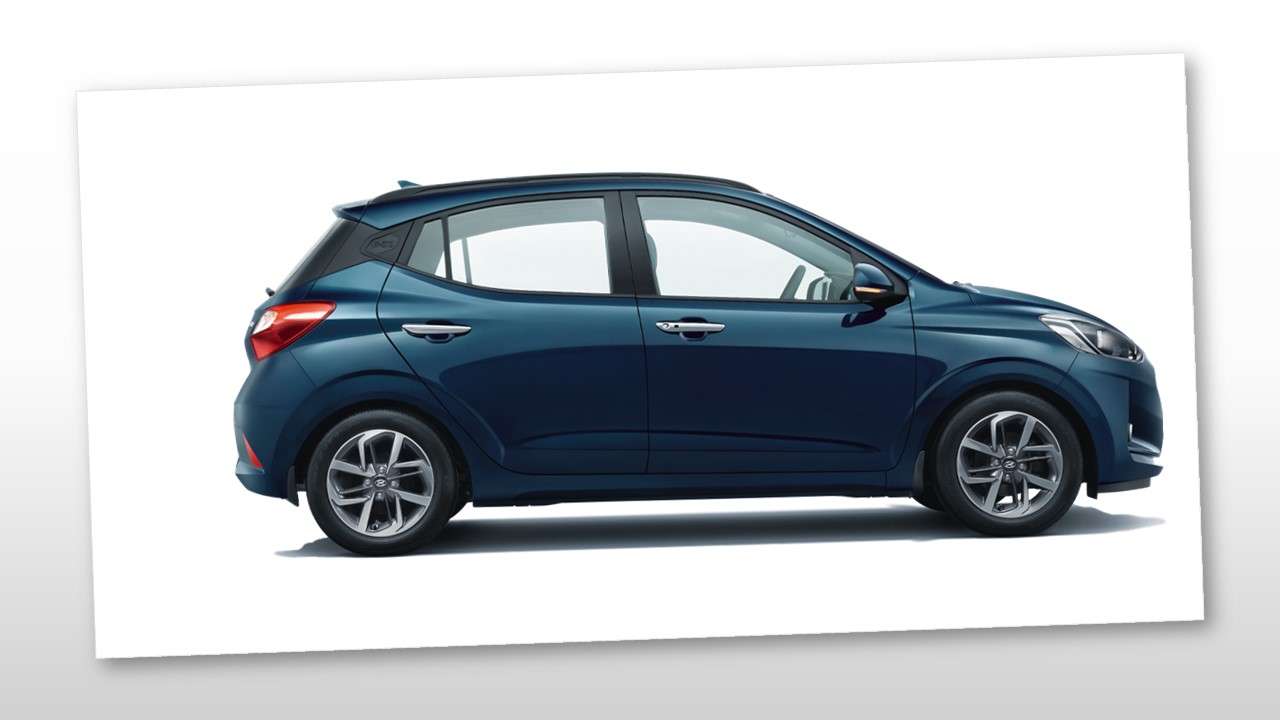
Likewise, Hyundai will have different cars in each of their hatchback, sedan, and SUV range (from economy to premium) to cater to different customer needs & segments. So, having a portfolio that can cater to different customer segments can help get the maximum market share of the company.

Premium Hatchback car
Sedan
SUV

In this context, it is important to note – since Hyundai understood the different needs and preferences of Indian customers it was able to get a higher market share in the last 25 years, whereas Ford India which also launched its first car in 1996 couldn’t understand customer preferences and lost out in the market.

Hence you need to get your product strategy right & most importantly put consumers at the center of decision making!

Source: www.thehindubusinessline.com/companies/a-tale-of-two-automakers-fords-failure-hyundais-dream-run/article36388029.ece

Categories
Product Management Sales & Marketing

My 3 biggest learning as a Product Manager

Image Source : http://www.lenovo.com

Last month, I completed seven years at Lenovo & was reflecting on my learning. In this post, I have captured the three most important lessons I have learned in the last three years as a Product Manager. If any of these resonate with you, please drop in a comment to share your thoughts!

  1. Planning / Strategic Thinking!

Product managers(PMs) are the subject-matter-experts. They are considered technical evangelists & they are also the custodians of the products they manage. They get early information access to upcoming technology changes or expected supply shortages in the industry. Hence PMs should do the planning of demand/supply and pre-announce product transitions/upgrades. It helps minimize the turnaround time for customers & helps them in planning their product upgrades/refreshes in a planned way. I learned that a PM should also think strategically about what the company may need to grow to the next stage and drive the team forward. It could be suggesting a new product idea or promotion of a product for market share gain. It could be building partnerships to generate new revenue sources or doing cost optimizations by making products locally / achieving premiumization by introducing high ticket size products to grow profits.

2. Build a compelling product pitch!

I learned this with practice to keep the sales pitch simple (without jargon), minimal & focused on benefits than features. It also helps the sales team to grasp customer’s attention. The pitch should have a compelling story; as to why the customer should buy your product? It could be because of a product’s long history, innovation, rigorous testing standards, quality assurance, industry awards, etc. Lastly, all product collaterals should have a coherent message & should communicate the product benefits.

3. Gather feedback & customer insights!

In any organization, while product development teams would conduct user interviews/market research before the launch, what I have realized & is equally if not more important is gathering customer feedback post-launch. It is done in two ways: providing early samples for customer evaluations & gathering post-purchase feedback.

I recall a conversation with an enterprise customer who didn’t give me good feedback on a newly launched product; we later added the desired feature(which would extend the blue tooth range/coverage of that product by a few meters) in the next version of the product.

PMs should keep gathering feedback from multiple sources – customers / internal users of the product ( dogfooding ), surveys, and 3rd party research. It allows to build further enhancements & also to re-assess the market post the launch.