In my previous post, I shared how important it is to collect customer feedback to build a strong product portfolio that results in a solid product strategy. A winning or strong portfolio is where you have various products to offer to different customer needs & preferences.
For example, SAMSUNG who makes smartphones would have different product models like Galaxy M series for budget-conscious customers, Galaxy S series for value buyers, Galaxy A series, S series, and Z series for their mainstream and premium product range which offer better features.
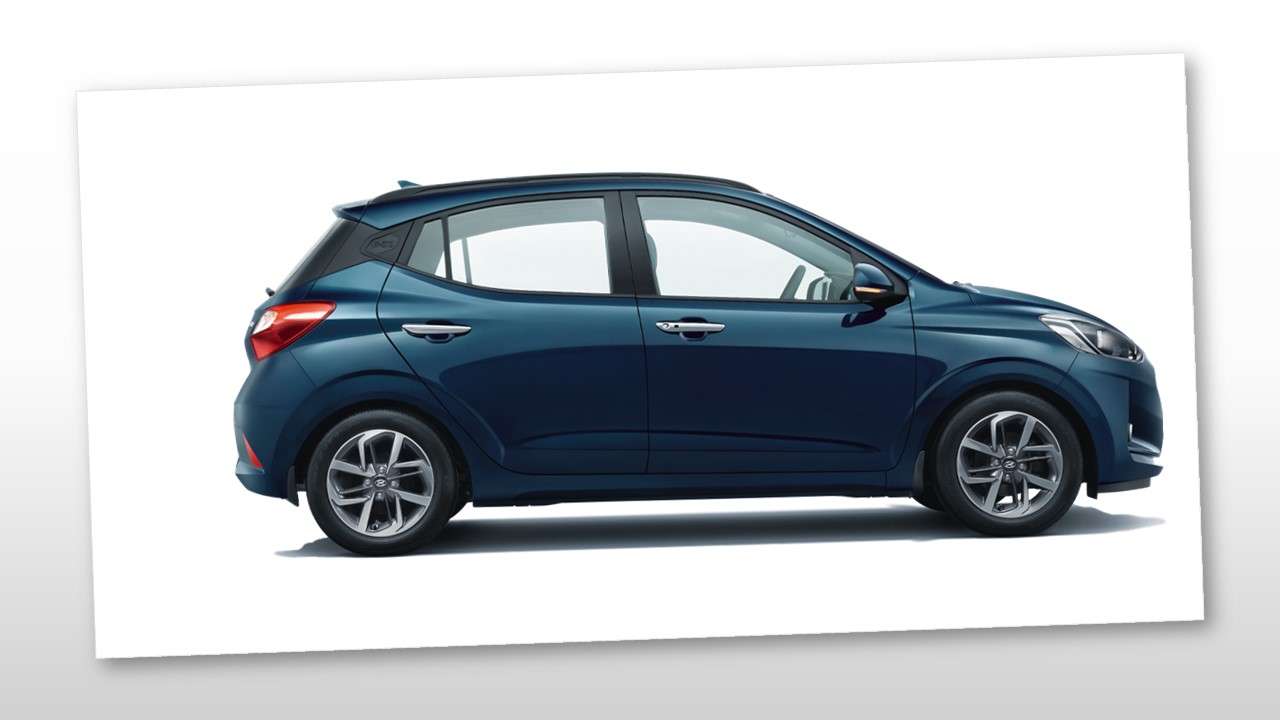
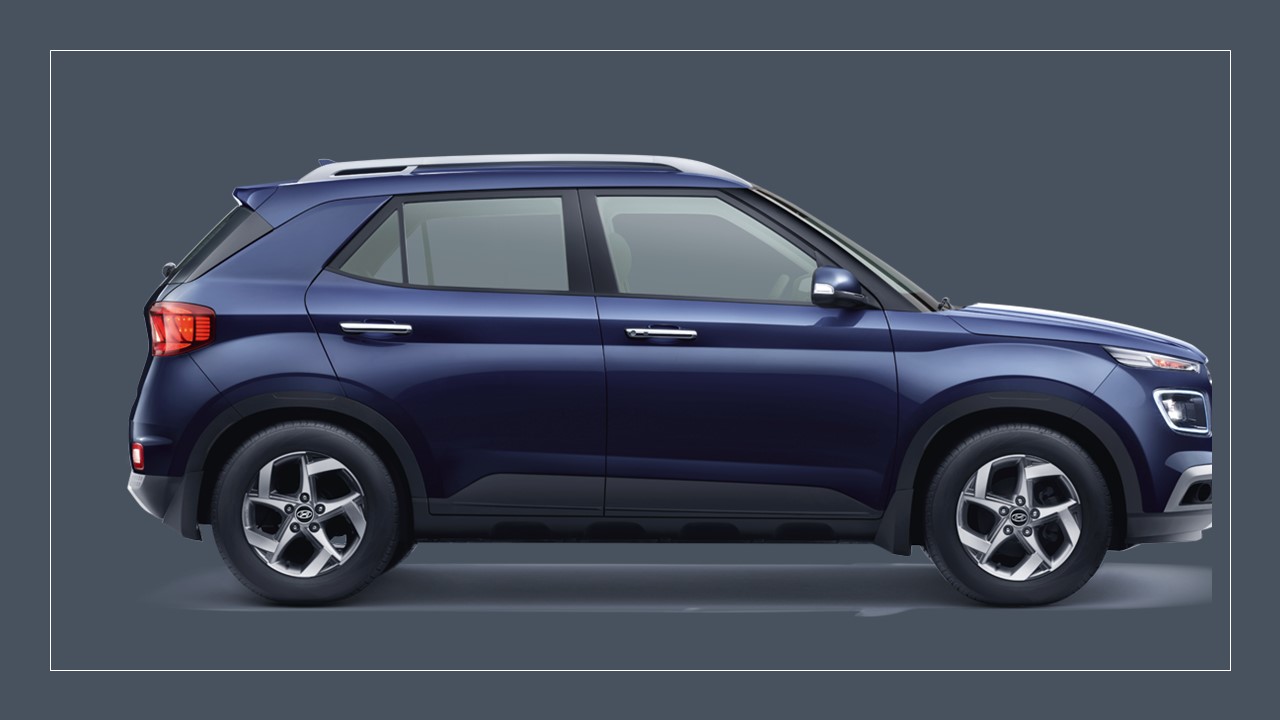
Likewise, Hyundai will have different cars in each of their hatchback, sedan, and SUV range (from economy to premium) to cater to different customer needs & segments. So, having a portfolio that can cater to different customer segments can help get the maximum market share of the company.
Premium Hatchback carSedanSUV
In this context, it is important to note – since Hyundai understood the different needs and preferences of Indian customers it was able to get a higher market share in the last 25 years, whereas Ford India which also launched its first car in 1996 couldn’t understand customer preferences and lost out in the market.
Hence you need to get your product strategy right & most importantly put consumers at the center of decision making!
In my previous article, I talked about the 3 biggest learning which I learned as a product manager :
1. Planning / Strategic Thinking
2. Building a compelling product pitch
3. To gather feedback & customer insights
Today, I want to share a product story that is focused on the 3rd learning that is gathering multiple feedback and customer insights to build a product. I thought this product story would be a perfect example to illustrate the importance of capturing customer insights & then meticulously implementing them during the product development phases.
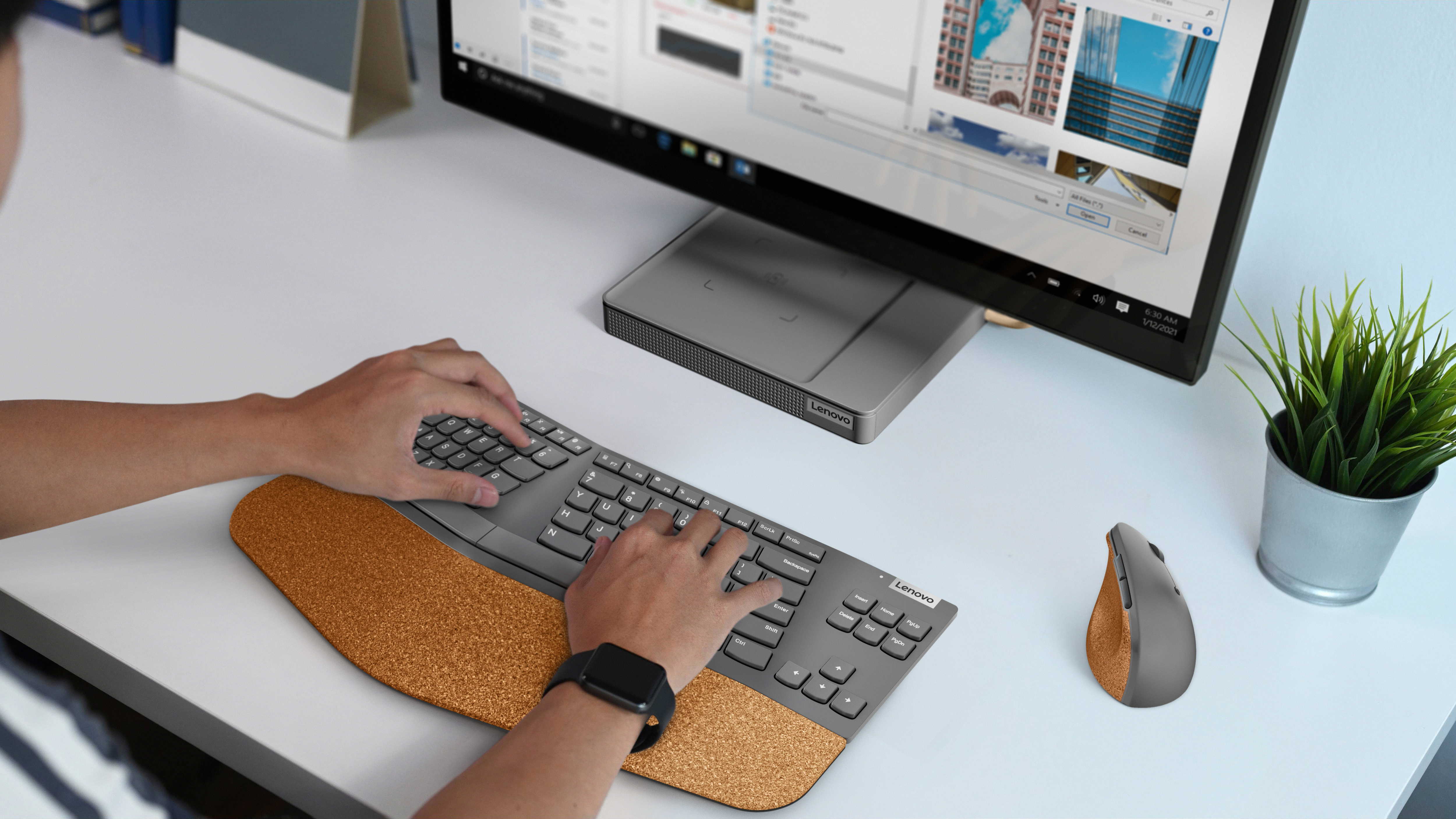
Sculpted for Comfort – New Lenovo Go Wireless Vertical Mouse
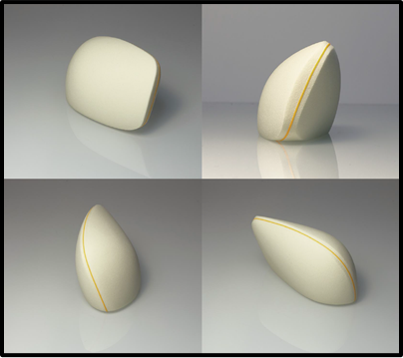
Phase 1: Experimenting with vanishing bone lines.
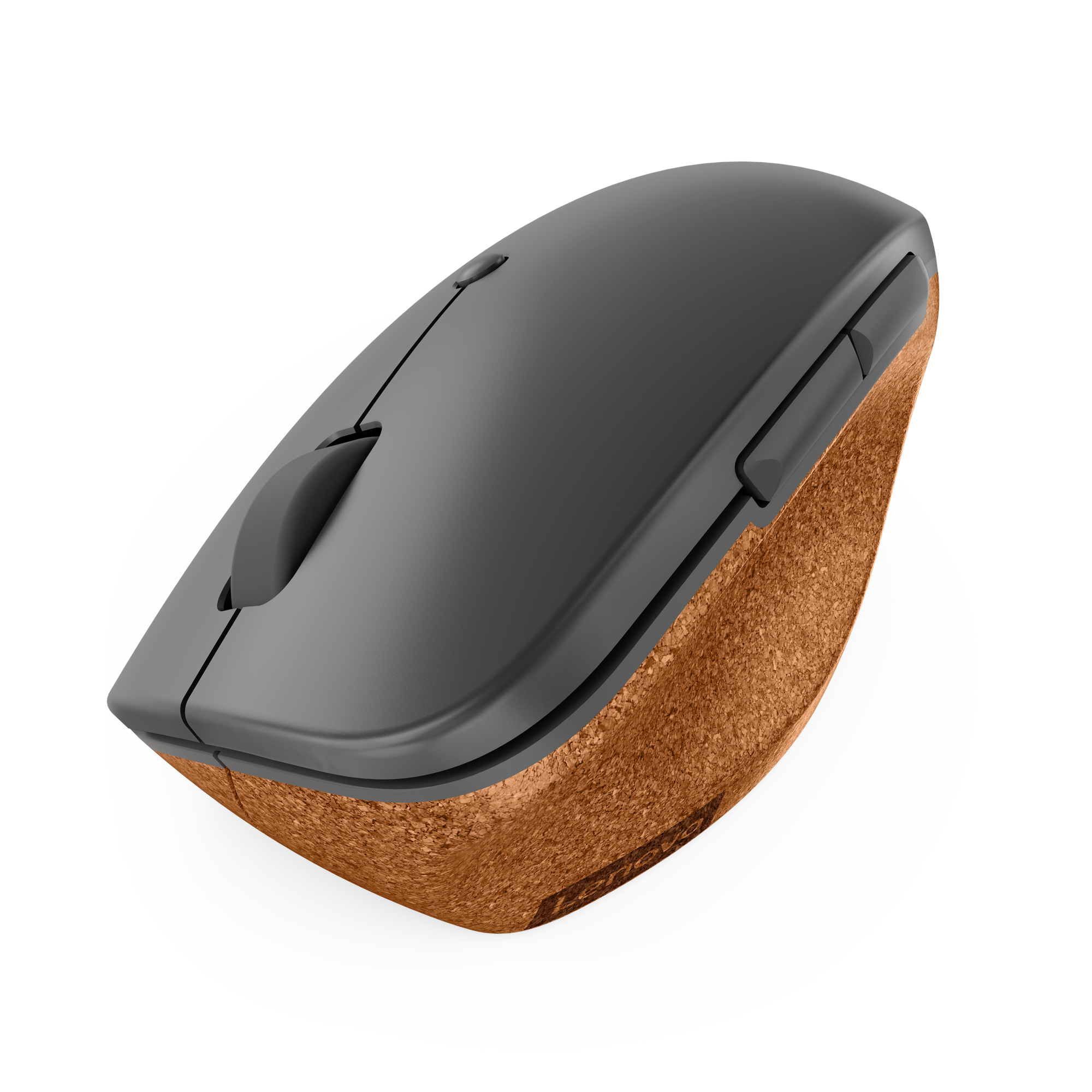
Soft organic contour with optimal curvature to rest the palm with lines following the shape of the user’s hand
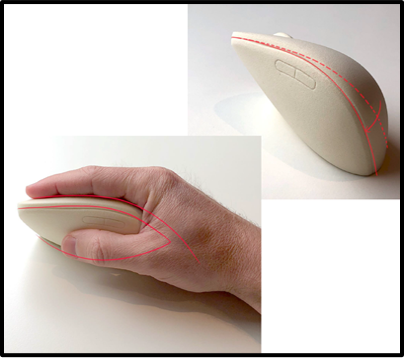
Phase 2: Optimize Bone Line contour
The silhouette should follow the shape of the user’s hand with bone-line/parting line contour
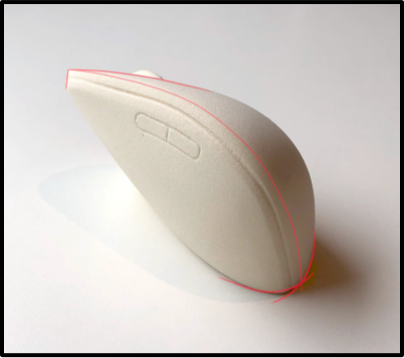
Customer Insight: Soften palm area
Keep bone line visible, but bring A and B surfaces closer to the tangent in the area that rests in the user’s palm
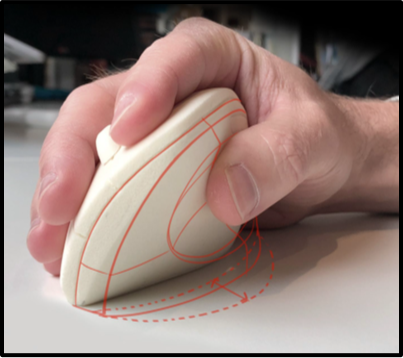
Customer Insight: Thumb Support
Integrate a thumb pocket to better support the user’s thumb. Add stability and comfort but keep it away from feeling too heavy or bulky
Phase 3: Explore button placement and sizes
Add side buttons and make models with varying sizes and shape for user testing
Phase 4: Iteration, optimize button clicks and cork coating
Ensure mouse buttons are easy to click with optimal click force
Optimize UV coating on the cork to balance reliability with a soft-to-touch feel.
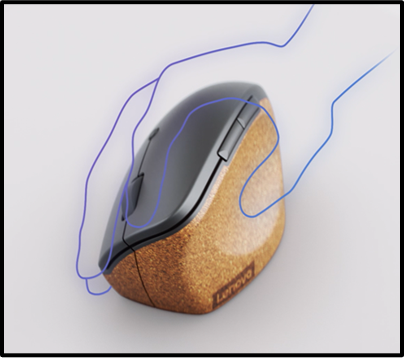
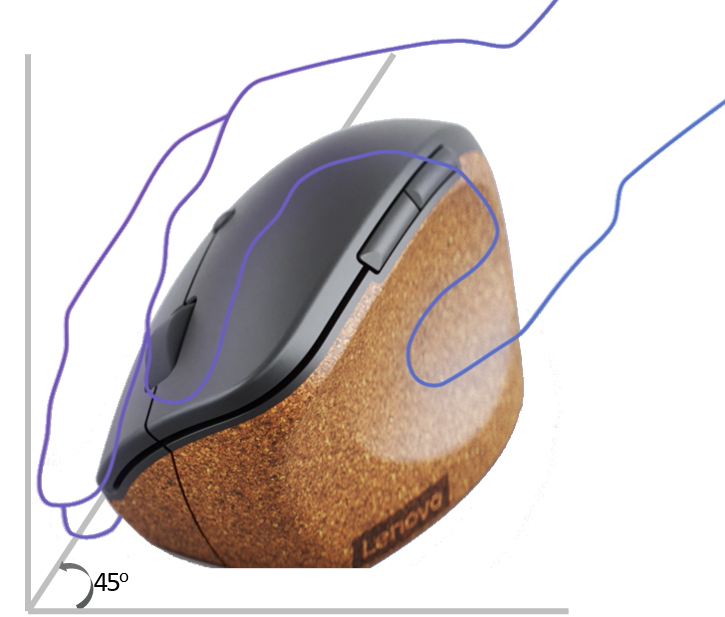
Lenovo Go Wireless Vertical Mouse promotes a natural handshake position with a 45-degree vertical angle. Holding the mouse at this position helps reduce wrist strain.
Benefits :
Reduce pronation: Pronation is the muscle tension produced when the bone of the forearm and muscle crosses each other
Reduce carpal tunnel: The strain on the wrist area resulting from prolonging contact of the wrist with the surface
Reduce ulnar/radial deviation: Strain resulting from the movement of palm away from the neutral position
Unique and Comfortable Cork Material – Lenovo Go Wireless Vertical Mouse is the world’s 1st mouse that uses a Cork palm grip.
Cork not only makes the product stands out and looks good but also gives it a progressive feel. It makes the mouse feels comfortable and soft to touch. It provides a softer cushion, absorbs and disperses energy wider than plastic. Cork also has good thermal properties, maintaining a warm feeling to touch even in winter.
Last month, I completed seven years at Lenovo & was reflecting on my learning. In this post, I have captured the three most important lessons I have learned in the last three years as a Product Manager. If any of these resonate with you, please drop in a comment to share your thoughts!
Planning / Strategic Thinking!
Product managers(PMs) are the subject-matter-experts. They are considered technical evangelists & they are also the custodians of the products they manage. They get early information access to upcoming technology changes or expected supply shortages in the industry. Hence PMs should do the planning of demand/supply and pre-announce product transitions/upgrades. It helps minimize the turnaround time for customers & helps them in planning their product upgrades/refreshes in a planned way. I learned that a PM should also think strategically about what the company may need to grow to the next stage and drive the team forward. It could be suggesting a new product idea or promotion of a product for market share gain. It could be building partnerships to generate new revenue sources or doing cost optimizations by making products locally / achieving premiumization by introducing high ticket size products to grow profits.
2. Build a compelling product pitch!
I learned this with practice to keep the sales pitch simple (without jargon), minimal & focused on benefits than features. It also helps the sales team to grasp customer’s attention. The pitch should have a compelling story; as to why the customer should buy your product? It could be because of a product’s long history, innovation, rigorous testing standards, quality assurance, industry awards, etc. Lastly, all product collaterals should have a coherent message & should communicate the product benefits.
3. Gather feedback & customer insights!
In any organization, while product development teams would conduct user interviews/market research before the launch, what I have realized & is equally if not more important is gathering customer feedback post-launch. It is done in two ways: providing early samples for customer evaluations & gathering post-purchase feedback.
I recall a conversation with an enterprise customer who didn’t give me good feedback on a newly launched product; we later added the desired feature(which would extend the blue tooth range/coverage of that product by a few meters) in the next version of the product.
PMs should keep gathering feedback from multiple sources – customers / internal users of the product ( dogfooding ), surveys, and 3rd party research. It allows to build further enhancements & also to re-assess the market post the launch.


 Lessons from Product Management